
Porsche · digital presskit
Family ties: the 911 and its brothers
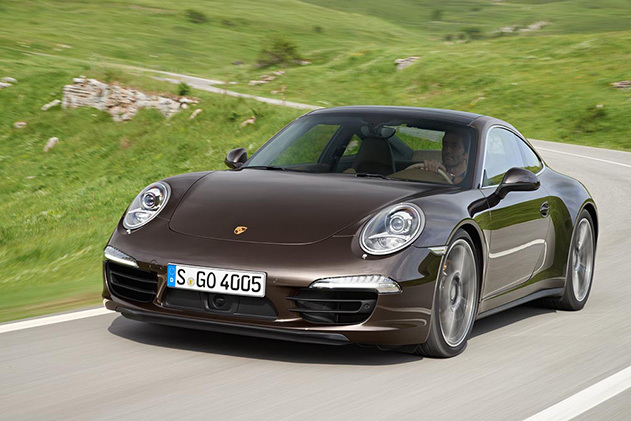
For the other lines of the Porsche brand too the 911 is a template and shining example. 50 years of success have long since made the original into the genetic model. There is something of the 911 in every Porsche. In design and technology, sportiness and everyday practicality, every Porsche model and line without exception orients itself on the iconic 911. Externally the family lineage can be seen from unique design traits that are instantly recognisable, while under the hood it is efficient engineering solutions that the 911 pioneered. And, of course, the sporty driving experience and extraordinary spectrum of great suitability ranging from track to road, which is found in different measure in every Porsche and yet is always authentically true to the brand.
One of the globally unique special features of the 911 is the constancy with which it exemplifies the Porsche brand values: not provocative aggression, but sporting fairness, on the racetrack and in everyday motoring. A reputation that has earned it widespread popularity across society. Porsche takes great care with every new product to build on this popularity. The result is vehicles that take up individual positions within their markets and further convey the Porsche idea.
The 911 was unmistakably the influence behind every Porsche in today’s model range. One shared detail is, for instance, the low front sections of all Porsche models, where the wings are always higher than the bonnet. Instead of a radiator grille there are air inlets. The muscular wing contours with the ‘Coke bottle line’ seen from above is common to all models, as are the V-shaped, tapering joints at the front and rear, plus the design of the rear light cluster, which emphasises the shape of the rear wing. The way in which the surfaces are formed, the interplay between concave and convex areas, for which Porsche is known and which is also one of the characteristic identifying features of a Porsche, is individually developed on every vehicle and often pushed to the very limit of what can technically be achieved. Without having to trouble any short-lived, fashionable features, the design of the Porsche vehicles touches the observer at the very first moment of eye contact in a highly emotional, but fully unique way: cars that you desperately want to wash by hand even though they are already clean, just to be able to experience the shape more intensely.
The engineering genes: fit for racing and everyday driving
Equally unique are the engineering genes of the 911, which reappear in all other Porsche vehicles. Over the 50 years of its development, the 911 has like no other sports car on earth cultivated its extreme breadth between racetrack capability on the one hand and everyday motoring suitability on the other. It always remained exemplary in its efficiency and established engineering solutions in the car market that stood the test of time.
The most prominent 911 engineering inheritance is carried by the Boxster and Cayman in front of the rear axle: the flat-six engine, which combines optimum balancing of mass and thus quiet running with peerlessly low centre of gravity. The two-seaters have two independently developed engines with custom capacities, outputs and set-ups. However, the concept comes from the 911: variable control times, reversible valve stroke – called VarioCam Plus – and direct petrol injection are the underlying components. The latest technology transfer added to this vehicle electrical system recuperation, map-controlled thermal management of engine cooling and the auto start/stop function. The central positioning of the engine goes back to the very origins of the brand: the great grandfather of all Porsche sports cars, the Porsche No. 1 of 1948, was a two-seater with a flat engine ahead of the rear axle.
Not only the engine, but also the gearbox and chassis components of the Boxster and Cayman are close derivatives from the current 911. The optional 7-speed PDK direct shift gearbox is largely the same – except for turning in the opposite direction, of course! The roadster and sports coupé thus now also allow ‘coasting’, i.e. fuel-saving, non-powered rolling using the engine’s idling speed.
Even given all the differences between the mid-engine two-seaters and the four-seater 911 Carrera with a rear engine, the vehicle body is a technical masterpiece that has benefited from the current 911: the lightweight body of the Cayman is made 44% of aluminium. The strategy for which material to use to optimum effect in which place originates from the development of the current 911 Carrera generation. Intelligent lightweight construction has always been one of the core features of the 911 – and of every Porsche. For 50 years, this principle has enabled the 911, with less engine power, to be faster than much more powerful rivals.
Components and concepts: the 911 points the way
Above all else the 911 is for all Porsche vehicles the key influence behind numerous concepts and components. Rather than relying on short-term effects, Porsche puts its faith in long-term technologies – when they are ready to do the job. No other carmaker, for instance, has worked for so long or so consistently with supercharging by exhaust turbocharger. Anyone who said ‘Turbo’ in the 1970s or ‘80s meant the Porsche 911 Turbo. From this emerged a prime example of downsizing in engine construction, the 2.8-litre engine of the Porsche 959. Today, turbo-charging is seen as the ideal way to cut down weight and reduce fuel consumption. This example also shows that efficiency improvements at Porsche are always performance improvements as well. Turbo engines with the know-how from the 911 power, for instance, the top Cayenne and Panamera models, setting new standards in their respective market segments.
What gave the 911 a 50-year history of success is carried on today in parallel fashion and in their own independent way by the other Porsche lines. Sporting flair and everyday practicality, innovation and efficiency are the characteristics that have carried the Cayenne into the SUV segment and the Panamera into the GT class. Like the 911, they are offering the right solution at the right time. The Cayenne S Hybrid, for instance, was not the first hybrid vehicle in this segment, but the Porsche with its two engines continues to this day to far outsell all the rest. Design, profile and silhouette secure a unique position for the Panamera in its market segment. Designed as a four-door touring sports car, it combines many talents in typical Porsche style: sporty handling, a spacious, variable interior and on top of that the supremely comfortable ride of a typical grand tourer.
And there is one more thing that all Porsche vehicles have inherited from the 911: the clear, well-developed ergonomics of a sports car; a Porsche driver instantly and instinctively feels at home in every model of every range. That guarantees the ideal basis for the Porsche driving experience, regardless of this being provided in such individual style by the different model lines - with one special shared feature that has been a Porsche trademark since day one: the ignition lock is always to the left of the steering column. This detail too reappears in every Porsche.
One of the globally unique special features of the 911 is the constancy with which it exemplifies the Porsche brand values: not provocative aggression, but sporting fairness, on the racetrack and in everyday motoring. A reputation that has earned it widespread popularity across society. Porsche takes great care with every new product to build on this popularity. The result is vehicles that take up individual positions within their markets and further convey the Porsche idea.
The 911 was unmistakably the influence behind every Porsche in today’s model range. One shared detail is, for instance, the low front sections of all Porsche models, where the wings are always higher than the bonnet. Instead of a radiator grille there are air inlets. The muscular wing contours with the ‘Coke bottle line’ seen from above is common to all models, as are the V-shaped, tapering joints at the front and rear, plus the design of the rear light cluster, which emphasises the shape of the rear wing. The way in which the surfaces are formed, the interplay between concave and convex areas, for which Porsche is known and which is also one of the characteristic identifying features of a Porsche, is individually developed on every vehicle and often pushed to the very limit of what can technically be achieved. Without having to trouble any short-lived, fashionable features, the design of the Porsche vehicles touches the observer at the very first moment of eye contact in a highly emotional, but fully unique way: cars that you desperately want to wash by hand even though they are already clean, just to be able to experience the shape more intensely.
The engineering genes: fit for racing and everyday driving
Equally unique are the engineering genes of the 911, which reappear in all other Porsche vehicles. Over the 50 years of its development, the 911 has like no other sports car on earth cultivated its extreme breadth between racetrack capability on the one hand and everyday motoring suitability on the other. It always remained exemplary in its efficiency and established engineering solutions in the car market that stood the test of time.
The most prominent 911 engineering inheritance is carried by the Boxster and Cayman in front of the rear axle: the flat-six engine, which combines optimum balancing of mass and thus quiet running with peerlessly low centre of gravity. The two-seaters have two independently developed engines with custom capacities, outputs and set-ups. However, the concept comes from the 911: variable control times, reversible valve stroke – called VarioCam Plus – and direct petrol injection are the underlying components. The latest technology transfer added to this vehicle electrical system recuperation, map-controlled thermal management of engine cooling and the auto start/stop function. The central positioning of the engine goes back to the very origins of the brand: the great grandfather of all Porsche sports cars, the Porsche No. 1 of 1948, was a two-seater with a flat engine ahead of the rear axle.
Not only the engine, but also the gearbox and chassis components of the Boxster and Cayman are close derivatives from the current 911. The optional 7-speed PDK direct shift gearbox is largely the same – except for turning in the opposite direction, of course! The roadster and sports coupé thus now also allow ‘coasting’, i.e. fuel-saving, non-powered rolling using the engine’s idling speed.
Even given all the differences between the mid-engine two-seaters and the four-seater 911 Carrera with a rear engine, the vehicle body is a technical masterpiece that has benefited from the current 911: the lightweight body of the Cayman is made 44% of aluminium. The strategy for which material to use to optimum effect in which place originates from the development of the current 911 Carrera generation. Intelligent lightweight construction has always been one of the core features of the 911 – and of every Porsche. For 50 years, this principle has enabled the 911, with less engine power, to be faster than much more powerful rivals.
Components and concepts: the 911 points the way
Above all else the 911 is for all Porsche vehicles the key influence behind numerous concepts and components. Rather than relying on short-term effects, Porsche puts its faith in long-term technologies – when they are ready to do the job. No other carmaker, for instance, has worked for so long or so consistently with supercharging by exhaust turbocharger. Anyone who said ‘Turbo’ in the 1970s or ‘80s meant the Porsche 911 Turbo. From this emerged a prime example of downsizing in engine construction, the 2.8-litre engine of the Porsche 959. Today, turbo-charging is seen as the ideal way to cut down weight and reduce fuel consumption. This example also shows that efficiency improvements at Porsche are always performance improvements as well. Turbo engines with the know-how from the 911 power, for instance, the top Cayenne and Panamera models, setting new standards in their respective market segments.
What gave the 911 a 50-year history of success is carried on today in parallel fashion and in their own independent way by the other Porsche lines. Sporting flair and everyday practicality, innovation and efficiency are the characteristics that have carried the Cayenne into the SUV segment and the Panamera into the GT class. Like the 911, they are offering the right solution at the right time. The Cayenne S Hybrid, for instance, was not the first hybrid vehicle in this segment, but the Porsche with its two engines continues to this day to far outsell all the rest. Design, profile and silhouette secure a unique position for the Panamera in its market segment. Designed as a four-door touring sports car, it combines many talents in typical Porsche style: sporty handling, a spacious, variable interior and on top of that the supremely comfortable ride of a typical grand tourer.
And there is one more thing that all Porsche vehicles have inherited from the 911: the clear, well-developed ergonomics of a sports car; a Porsche driver instantly and instinctively feels at home in every model of every range. That guarantees the ideal basis for the Porsche driving experience, regardless of this being provided in such individual style by the different model lines - with one special shared feature that has been a Porsche trademark since day one: the ignition lock is always to the left of the steering column. This detail too reappears in every Porsche.